On this page
- What the Aqua Terra Actually Is
- Case Sizes and Fit
- The Movement: Where the Aqua Terra Actually Earns Its Case
- Pricing: The Real Argument for "Underrated"
- Where It Genuinely Beats the Alternatives
- Where It Falls Short of the Hype-Driven Alternatives
- Who Should Actually Buy One
- Buying With Confidence
- FAQ
- Conclusion
The Omega Seamaster Aqua Terra is a 150m water-resistant sports watch with a dress-watch silhouette, currently available in 34mm, 38mm, and 41mm cases, running Omega's Co-Axial Master Chronometer movement with 15,000-gauss magnetic resistance. Current 41mm steel-on-bracelet pricing sits around $6,200 to $6,950. It rarely gets the collector attention of the Speedmaster or Diver 300M, but it offers comparable engineering and genuine daily-wear versatility at a lower price than either — which is exactly the case for calling it Omega's most underrated watch.
Ask most people to name an Omega and you'll hear Speedmaster or, if they've seen a Bond film, Seamaster Diver 300M. The Aqua Terra rarely comes up, despite sitting in the same Seamaster family and, on paper, offering some of the most capable engineering in Omega's entire lineup. That gap between reputation and actual capability is worth examining directly, because it's not accidental — the Aqua Terra was built to be quietly competent rather than instantly recognizable, and that design choice is exactly why it gets overlooked.
What the Aqua Terra Actually Is
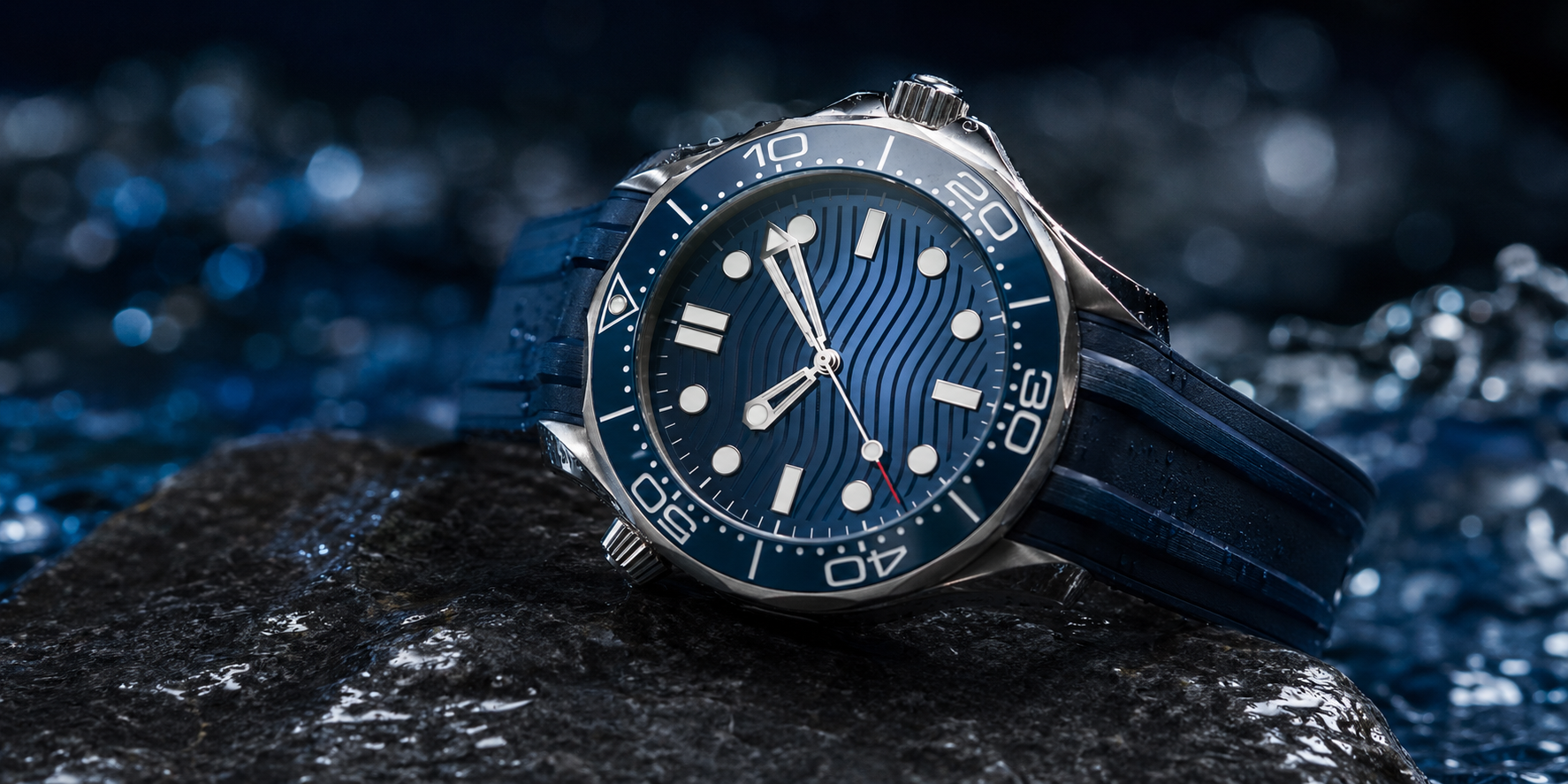
Omega launched the Aqua Terra in 2002, positioned deliberately as a bridge between the dive-oriented Seamaster lineage and the dressier Constellation family. The name spells out the intent directly: "Aqua" for its 150-meter water resistance, "Terra" for a dress-watch sensibility meant to feel at home on land, not just underwater. Where the Diver 300M and Planet Ocean lean fully into nautical styling, the Aqua Terra sits deliberately in between — the versatile middle sibling of the Seamaster family rather than a specialist tool.
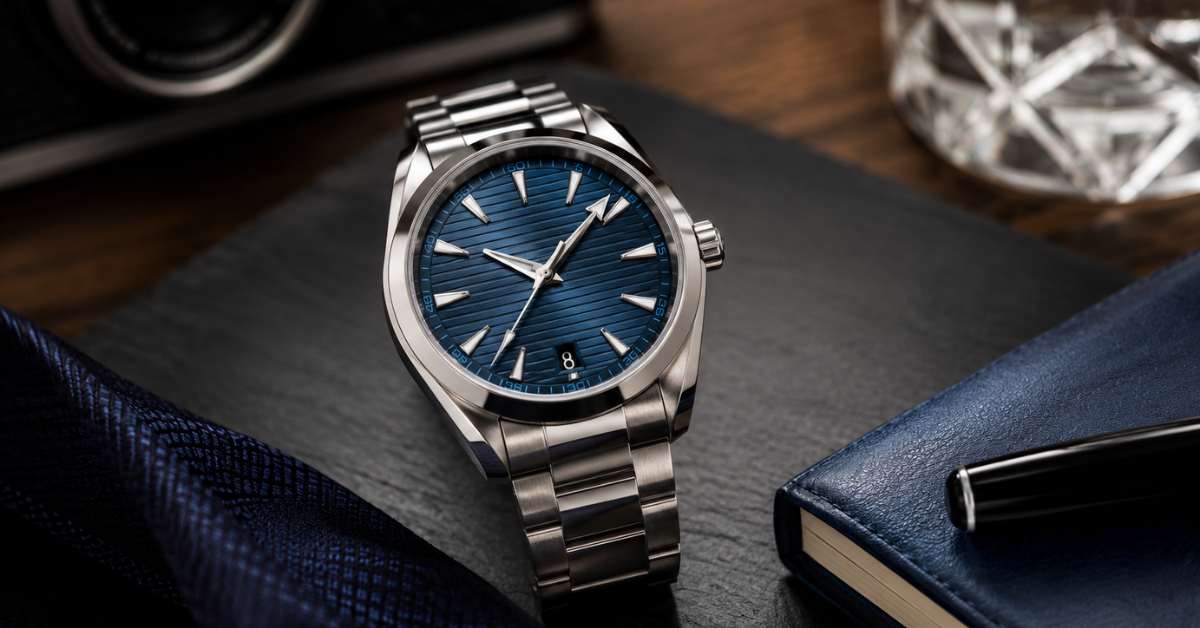
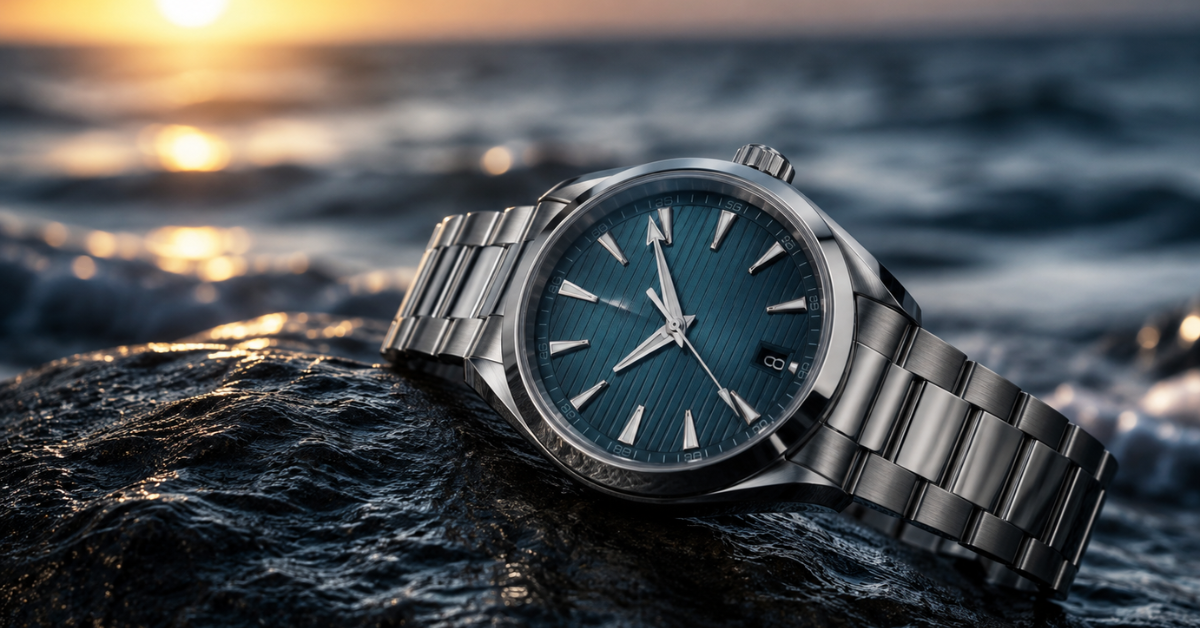
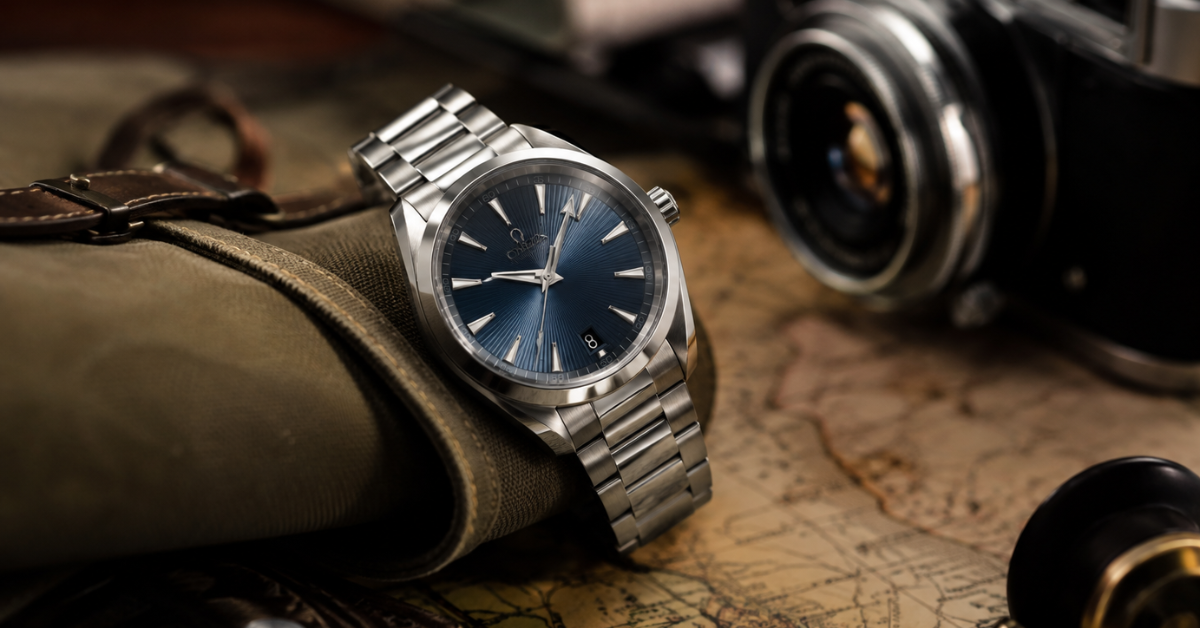
The current generation, refreshed in 2017 with new dial options introduced through 2024, features a symmetrical case, a wave-edged caseback, and Omega's signature teak-pattern dial — horizontal stripes inspired by the wooden decks of luxury yachts, available across a genuinely wide color range including blue, green, terracotta, and saffron.
Case Sizes and Fit
The Aqua Terra currently spans 34mm, 38mm, and 41mm cases, giving it one of the broadest size ranges in Omega's current catalog. The 38mm and 41mm are the references most buyers actually consider: the 38mm adds a quick-set date function and suits smaller or average wrists well, while the 41mm brings a longer 60-hour power reserve and an independently adjustable hour hand — a genuinely useful travel feature that lets you set the hour hand to a new time zone without disturbing the minute hand or date.
The Movement: Where the Aqua Terra Actually Earns Its Case
This is the part of the Aqua Terra that gets underappreciated relative to what it delivers. Current references run Omega's Co-Axial Master Chronometer movement — Calibre 8800 in the 38mm, Calibre 8900 in the 41mm — independently certified by METAS, Switzerland's federal metrology institute, to resist magnetic fields up to 15,000 gauss. That's a meaningfully higher bar than most competing watches in this price range clear, including references from brands with considerably stronger name recognition.
For context on how this movement technology performs across Omega's broader Seamaster lineup, our Seamaster Diver 300M review and Planet Ocean review cover the same Master Chronometer certification in Omega's more overtly sporty references, useful if you're comparing across the full Seamaster family rather than just this one watch.
Pricing: The Real Argument for "Underrated"
Current 41mm steel Aqua Terra pricing on a bracelet generally runs $6,200 to $6,950, depending on dial color and configuration — genuinely competitive with, and often below, comparable steel sports-dress watches from other major Swiss brands occupying the same daily-wear category. Pre-owned pricing spans a wider range depending on reference and complication, from roughly $3,500 for clean three-hand 38.5mm examples up toward $7,700 for more complicated references like the Worldtimer.
That pricing sits below Omega's own Diver 300M and Planet Ocean in some configurations, despite offering comparable movement technology and arguably more day-to-day versatility. If you're weighing the Aqua Terra against Omega's wider catalog, our Omega Watches Buying Guide covers how it fits into the brand's broader pricing structure.
Where It Genuinely Beats the Alternatives
The honest case for "underrated" comes down to a simple mismatch: the Aqua Terra does more, for less recognition and often less money, than watches that get significantly more collector attention. It handles a swim the way the Diver 300M does, reads dressier than either core diver in the Seamaster range, resists magnetism to a degree that outperforms comparable references from other major Swiss brands at similar price points, and does all of it in a case that disappears convincingly under a dress shirt cuff — something neither the Diver 300M nor the Planet Ocean manages quite as well.
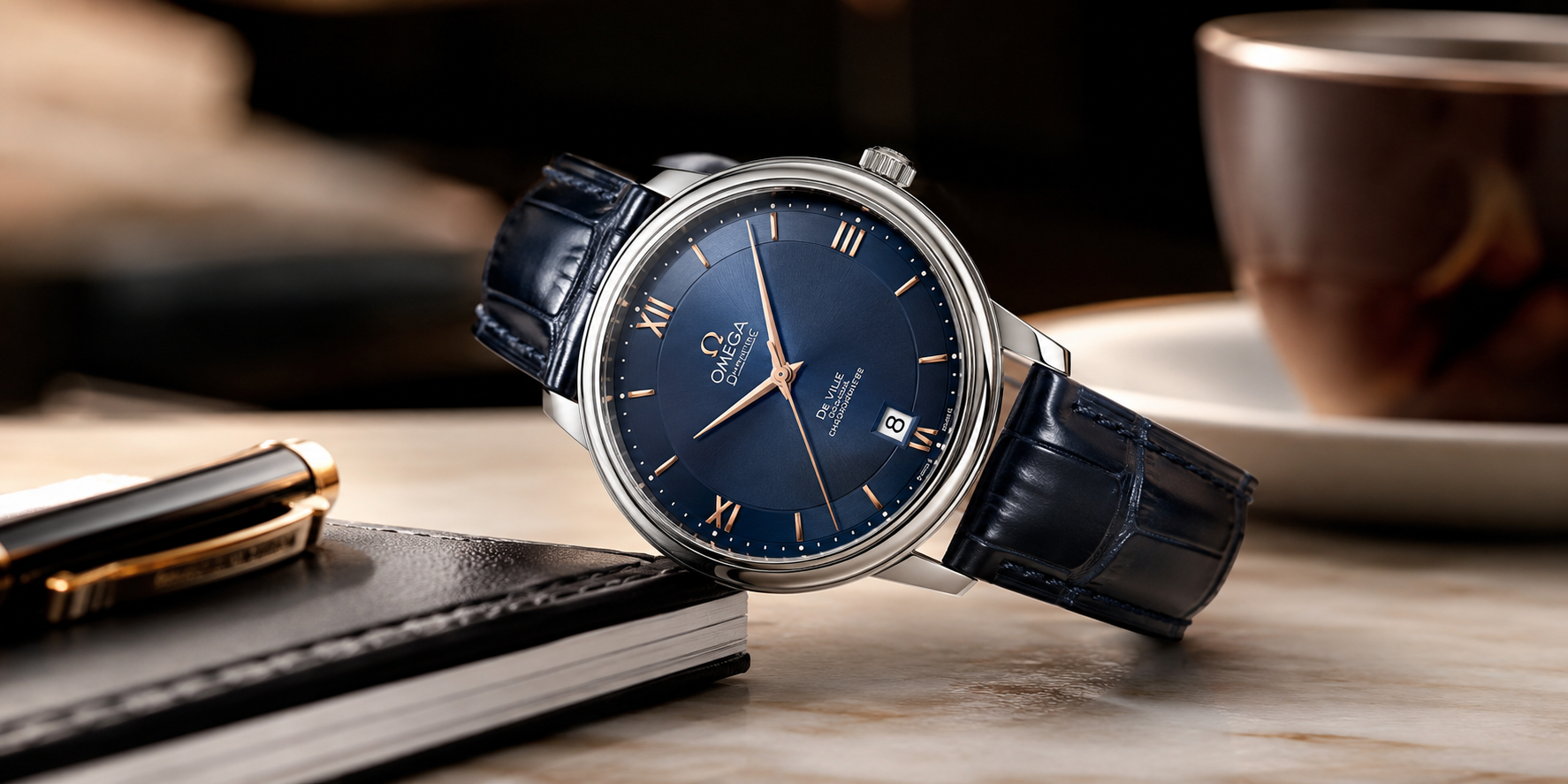
For a genuine dress-watch comparison within Omega's own catalog, our De Ville review covers the collection built purely for formal wear, useful context for understanding exactly where the Aqua Terra sits between that and the sportier Seamaster divers — closer to De Ville in versatility than either diver, without fully committing to dress-watch territory the way De Ville does.
Where It Falls Short of the Hype-Driven Alternatives
None of this makes the Aqua Terra the right watch for every buyer, and it's worth being honest about why it stays underrated rather than treating that as purely an injustice. It doesn't carry the Speedmaster's NASA-tested history or the Diver 300M's Bond association — no cultural shorthand attached to the name, which matters to some buyers more than spec sheets ever will. It's also, by design, a quieter watch: nobody's clocking an Aqua Terra across a room the way they might a distinctive dive bezel or chronograph pushers. If part of what you want from a watch is instant recognizability, the Aqua Terra intentionally doesn't offer that.
Who Should Actually Buy One
The Aqua Terra makes the most sense for buyers who want one watch that genuinely covers office, weekend, and water without compromise on any of the three — rather than optimizing hard for any single use case the way a dedicated dive watch or dress watch does. It's frequently the second or third Omega someone buys, after a diver has started to feel too heavy for daily wear or a dress watch has felt too formal for actual daily life. If that describes what you're looking for more than a watch with a famous origin story, it's genuinely one of the strongest values in Omega's current lineup.
Buying With Confidence
Whether new or pre-owned, buying from an authorized source removes any authentication risk. If you're considering the pre-owned route specifically to take advantage of the Aqua Terra's discount relative to new pricing, our guide on how to spot a fake Omega watch covers the checks worth running before you commit.
FAQ
Is the Omega Aqua Terra a dive watch or a dress watch? Neither exclusively — it's designed as a versatile middle ground, water resistant to 150 meters like a genuine sports watch but styled closely enough to a dress watch to work in formal settings.
What's the difference between the 38mm and 41mm Aqua Terra? The 38mm adds a quick-set date function and suits smaller wrists, while the 41mm offers a longer 60-hour power reserve and an independently adjustable hour hand, useful for changing time zones.
Why is the Aqua Terra considered underrated compared to other Omega watches? It offers comparable Master Chronometer movement technology and 15,000-gauss magnetic resistance to Omega's more famous Speedmaster and Diver 300M, often at a lower price, but lacks their cultural recognition and origin-story appeal.
How much does a new Omega Aqua Terra cost? Current 41mm steel models on a bracelet generally run $6,200 to $6,950 depending on dial color and configuration.
Is the Aqua Terra a good first Omega? It can be, though many buyers arrive at it as a second or third Omega, after finding a dedicated dive watch too sporty for daily wear or a dress watch too formal for everyday use.
Conclusion
"Underrated" is a fair label for the Aqua Terra precisely because its strengths are the kind that don't show up in a glance across a room — a genuinely capable Master Chronometer movement, real water resistance, and a case that works in more situations than most single-purpose watches manage. It won't out-recognize a Speedmaster or a Diver 300M, and it isn't trying to. What it offers instead is a watch built to be worn constantly rather than admired occasionally, which is arguably the harder thing to get right.
Features Writer
Daniel Cho
Daniel writes about watch design, collecting and the culture around horology, with a soft spot for tool watches and honest value.