
On this page
- The Core Difference: Chronograph vs. Diver
- Fit: Why 42mm Doesn't Mean the Same Thing on Both
- Winding It Yourself vs. Never Thinking About It
- Water: One of These Actually Wants to Get Wet
- Versatility: Which One Works With More of Your Wardrobe
- Price: A Real but Not Enormous Gap
- So Which One Fits Your Life?
- Buying With Confidence
- FAQ
- Conclusion
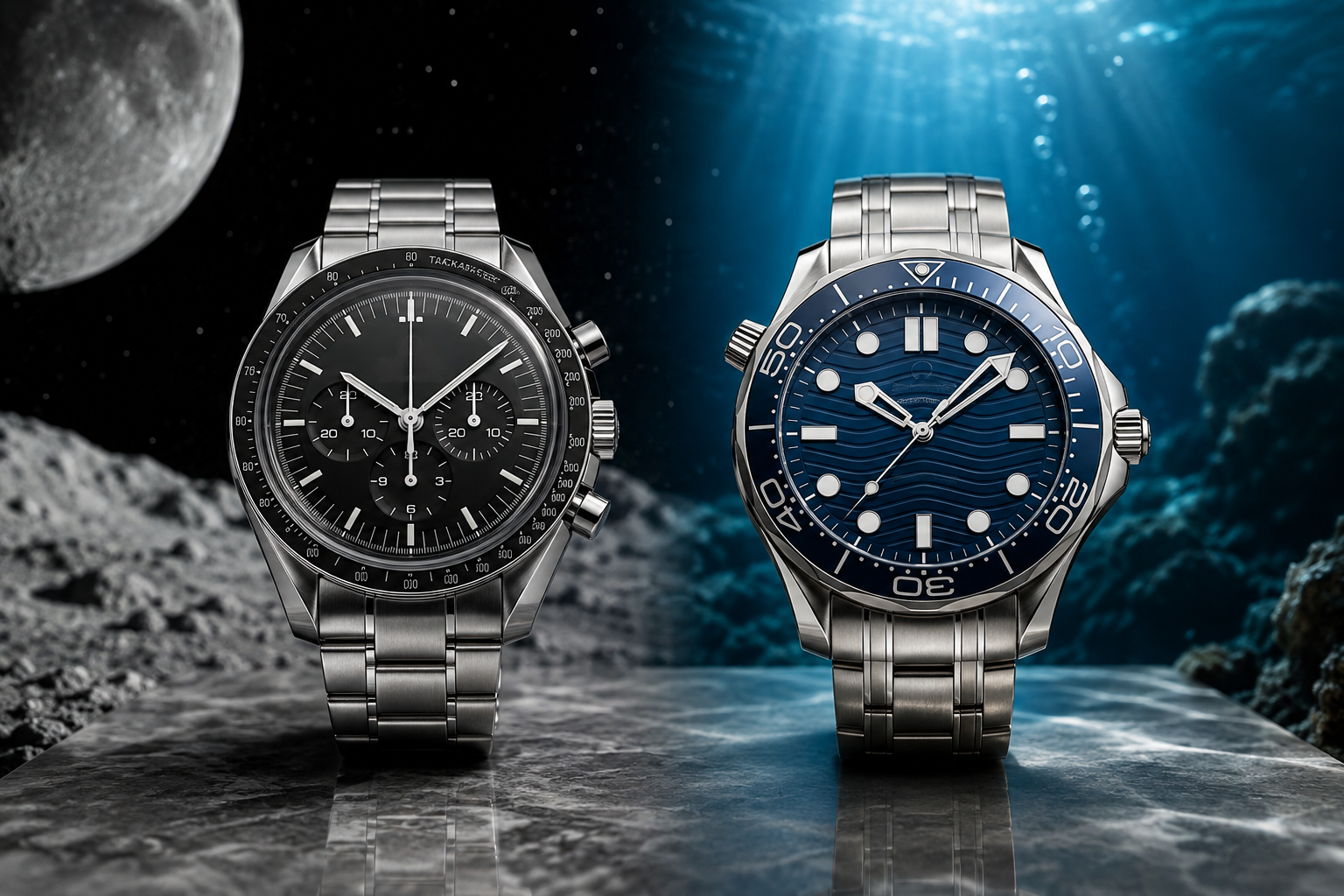
The Speedmaster and Seamaster Diver 300M are both 42mm Omega sports watches, but they suit different wrists and different lives. The Speedmaster is a manual-wind chronograph with no water resistance rating for diving, twisted lugs that wear shorter on smaller wrists, and a motorsport-and-NASA heritage that rewards buyers who like winding their watch and using a chronograph function. The Seamaster is automatic, rated to 300m, and built for anyone who wants a genuinely capable daily watch that can also go swimming. Neither is objectively better — the right one depends on how you'll actually wear it.
Ask an Omega owner which one to buy first, Speedmaster or Seamaster, and you'll usually get an answer shaped by what that person does with their wrists, not a ranking of which watch is "better." That's the right instinct. These are two genuinely different tools wearing similar case sizes, and the difference matters more than either watch's individual spec sheet.
This is a practical comparison, built around fit and actual use rather than which one has the better origin story — though both have excellent ones, covered elsewhere on this site.
The Core Difference: Chronograph vs. Diver
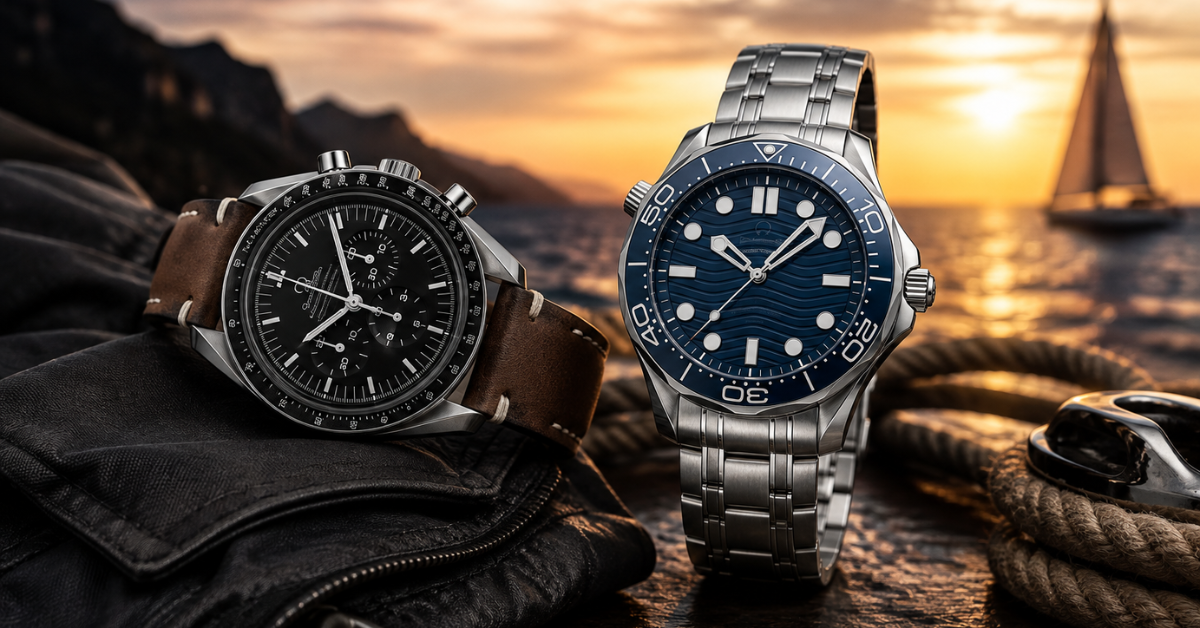
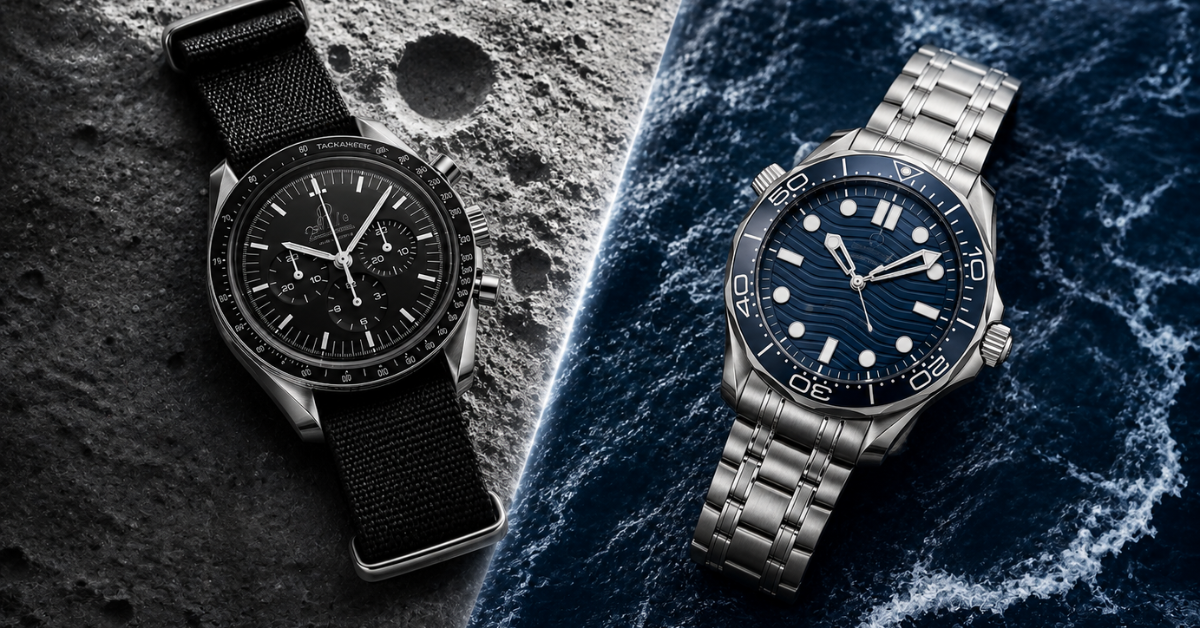
The Speedmaster is fundamentally a chronograph — a stopwatch function built into a wristwatch, originally designed in 1957 for motor racing before NASA adopted it for space missions. The core Moonwatch reference still runs on a manual-wind movement, which means no automatic rotor winding it as you move through your day; you wind it yourself, typically once daily. There's no water resistance rating suited to swimming or diving, and no date window cluttering the dial on the standard model. Its whole design vocabulary is built around the chronograph pushers and subdials.
The Seamaster Diver 300M is, straightforwardly, a dive watch — automatic movement, 300 meters of water resistance, a unidirectional rotating bezel for timing underwater, and the wave-pattern dial that's become one of Omega's most recognizable design signatures. If you want the deeper history on how it earned that reputation, our Seamaster Diver 300M review covers the full case for it. For the Speedmaster's own history, including the actual NASA qualification testing that shaped its reputation, our piece on why the Moonwatch actually went to the Moon is worth reading before you decide.
Fit: Why 42mm Doesn't Mean the Same Thing on Both
Here's where a lot of buyers get surprised. Both watches are commonly available at 42mm in diameter, but they wear differently on the wrist because of how the case and lugs are actually shaped.
The Speedmaster's lugs are notably twisted downward, a design choice from the original 1957 case that pulls the lug-to-lug measurement in tighter than the diameter alone suggests. In practice, that means a 42mm Speedmaster can sit comfortably on a wrist that would feel crowded by a 42mm watch with straight lugs. It's part of why the Moonwatch has remained wearable across generations of changing size preferences without Omega needing to shrink the case.
The Seamaster Diver 300M wears closer to its stated dimensions — a more conventional dive-watch case shape, robust and purposeful rather than compact. It's not an uncomfortable watch by any means, but if you have a genuinely smaller wrist and you're choosing between the two based on fit alone, the Speedmaster's lug geometry often gives it the edge.
Winding It Yourself vs. Never Thinking About It
This is the difference that actually shapes daily experience more than any spec sheet number. The Speedmaster's manual-wind movement means a small daily ritual — pulling the crown, winding it by feel, a moment of actual mechanical engagement with the watch before you put it on. Some people find that genuinely satisfying. Others find it one more thing to remember, especially if the watch sits unworn for a few days and needs re-setting.
The Seamaster's automatic movement removes that entirely. Wear it regularly and it stays wound and running on its own; set it down for a few days and it may need a quick shake or a few crown turns to restart, but there's no daily ritual required. If you want a watch you genuinely don't have to think about, that's a real point in the Seamaster's favor.
Water: One of These Actually Wants to Get Wet
This is the most practical, least romantic way to make the decision, and it's often the right one. If there's any real chance you're swimming, diving, or regularly around water in this watch, the Seamaster's 300-meter rating and dive bezel are built for exactly that. The Speedmaster isn't designed for it — Omega doesn't rate the standard Moonwatch for swimming, and treating it like a dive watch is a good way to void a warranty claim down the line.
If you're deciding between an even more water-capable Omega and the Diver 300M specifically, our Planet Ocean review covers how Omega's more serious dive tool compares to the 300M, useful context if water resistance is genuinely a priority for you rather than a nice-to-have.
Versatility: Which One Works With More of Your Wardrobe
The Speedmaster's cleaner dial — no rotating bezel, no wave texture, often no date window — lets it lean slightly more formal than the Seamaster, particularly on a leather strap rather than the steel bracelet. It's not a dress watch, but it crosses into business-casual territory more comfortably than a dive watch typically does.
The Seamaster is unapologetically a sports watch, and it wears that way — excellent with a t-shirt, capable under a rolled-up shirt sleeve, less at home under a suit cuff than the Speedmaster. Neither is wrong; it depends on how much of your week actually calls for a dressier watch.
Price: A Real but Not Enormous Gap
Current Speedmaster and Seamaster Diver 300M pricing sits in a broadly similar range at retail, generally within a few hundred dollars of each other depending on the specific reference and strap or bracelet choice. Neither is clearly the "budget" option relative to the other. If you want the full current Speedmaster lineup broken down by reference and price, our Best Omega Speedmaster Models guide covers that in detail, and our general Omega Watches Buying Guide is a good starting point if you're comparing across the wider catalog rather than just these two.
So Which One Fits Your Life?
- Want a genuine daily watch that can also swim? Seamaster.
- Like the idea of winding your watch and using a chronograph function? Speedmaster.
- Have a smaller wrist and want the better fit? Speedmaster, thanks to the twisted lugs.
- Want something that leans slightly dressier? Speedmaster.
- Want the more recognizable "sports watch" silhouette day to day? Seamaster.
- Genuinely torn? That's a legitimate answer too — plenty of Omega owners end up with both eventually, because they solve different problems rather than competing for the same job.
Buying With Confidence
Whichever one you land on, buy from an authorized dealer to remove any authentication risk entirely. If you're considering the pre-owned market to save on either watch, our guide on how to spot a fake Omega watch covers the nine checks worth running before you commit.
FAQ
Is the Speedmaster or Seamaster better for a first Omega? Neither is objectively better — the Seamaster suits buyers who want a low-maintenance daily watch with real water resistance, while the Speedmaster suits buyers drawn to manual winding, chronograph function, and a slightly dressier silhouette.
Does the Speedmaster fit smaller wrists better than the Seamaster? Generally, yes — the Speedmaster's twisted lug design pulls its lug-to-lug measurement in tighter than its 42mm diameter suggests, often making it wear more compactly than a Seamaster at the same stated size.
Can I swim or dive with a Speedmaster? No — the standard Speedmaster Moonwatch isn't rated for swimming or diving, unlike the Seamaster Diver 300M, which is built specifically for that.
Is the Speedmaster manual-wind or automatic? The core Moonwatch reference is manual-wind, requiring the crown to be wound by hand, typically daily; some other Speedmaster variants use automatic movements.
Which Omega is more expensive, the Speedmaster or Seamaster? Current pricing for both sits in a broadly similar range at retail, with the exact gap depending on the specific reference, strap, and bracelet configuration rather than one line being consistently cheaper.
Conclusion
The honest answer to "Speedmaster or Seamaster" is that they're not really competing for the same slot in your life. One rewards a bit of daily ritual and leans toward the dressier end of sports watches; the other disappears into daily wear and genuinely doesn't mind getting wet. Match the watch to how you'll actually use it, not to which one has the better story — both of those, it turns out, are excellent.
Senior Watch Writer
James Whitfield
James has spent over a decade covering Swiss horology, vintage markets and modern releases. He believes the best watch is the one you actually wear.