On this page
- What Master Chronometer Actually Requires
- The Hard Date That Rules Out Older Watches
- The Real Verification Tool Most Buyers Never Use
- What the Caseback Should Show
- Cross-Checking the Movement Caliber
- A Simple Supplementary Check: The Magnet Test
- Why This Certification Keeps Evolving
- Why This Matters More Than It Sounds
- FAQ
- Conclusion
"Master Chronometer" is a specific, verifiable certification, not a marketing phrase — every genuine one has a documented test record you can look up directly through Omega. Enter the reference number, serial number, and access code from the watch's Master Chronometer card at omegawatches.com/masterchronometer, and Omega displays the actual test results for that specific watch: accuracy, magnetic resistance, water resistance, and power reserve. A watch claiming Master Chronometer status that fails this lookup, predates 2015, or houses an older pre-certification movement caliber is not genuinely certified, regardless of what's printed on the dial.
"Master Chronometer" gets treated as a prestige word people repeat without necessarily checking what it actually requires — which makes it an easy phrase for a counterfeit dial or a misinformed seller to print without any of the substance behind it. This covers what the certification genuinely involves, and more usefully, exactly how to verify a specific watch actually earned it.
What Master Chronometer Actually Requires
This isn't a single test — it's two layers stacked on top of each other. First, the movement must pass COSC certification, the traditional Swiss chronometer standard, over 14 days of testing. Only after clearing that does Omega submit the watch for METAS certification specifically — eight additional tests conducted over roughly 10 more days, run by Switzerland's Federal Institute of Metrology, an independent government testing body, not an internal Omega process dressed up to look official.
Crucially, METAS testing evaluates the entire assembled watch, not just the bare movement — accuracy to within 0 to +5 seconds a day under real wearing conditions, resistance to magnetic fields up to 15,000 gauss, water resistance, and power reserve performance all get independently verified before a watch earns the Master Chronometer designation. That's a meaningfully higher bar than COSC certification alone, and it's the reason the phrase means something specific rather than functioning as a vague quality claim.
The Hard Date That Rules Out Older Watches
Here's a fact worth knowing before anything else: Omega only introduced METAS-approved testing in 2015, with the Globemaster as the first watch to earn the certification. Omega announced the program in December 2014 and began certifying watches the following year. That means any Omega genuinely predating 2015 simply cannot carry authentic Master Chronometer certification — the program didn't exist yet. A vintage or older Omega marketed with that phrase, or a listing claiming a pre-2015 reference is "Master Chronometer certified," is either a factual error or a deliberate misrepresentation, not a possibility worth investigating further.
The Real Verification Tool Most Buyers Never Use
This is the part of authentication that genuinely settles the question, and it's something most fake-spotting guides don't mention because it's specific to how Omega structured this particular certification. Every genuine Master Chronometer watch comes with a card carrying a reference number, serial number, and access code. Enter those three details into the "Access my Test Results" section at omegawatches.com/masterchronometer, and Omega displays the actual recorded results from that specific watch's testing — precision, magnetic resistance performance, and the rest of the eight-test battery, tied to that individual serial number.
This is a meaningfully stronger check than any visual inspection, because it doesn't rely on judging engraving depth or font weight — it either returns genuine, watch-specific test data, or it doesn't. A counterfeit can print "Master Chronometer" on a dial, but it cannot produce a serial number that returns real METAS results, because no such results were ever generated for a watch that never underwent the testing.
What the Caseback Should Show
Genuine Master Chronometer watches carry a specific medallion marking on the caseback, alongside the serial and reference numbers used for the online lookup above. If a watch is missing this medallion, missing its accompanying card, or a seller can't produce the access code needed to verify test results, that's a legitimate reason to pause before buying — not necessarily proof of a fake on its own, but a gap worth resolving before you pay for a certification you can't actually confirm.
Cross-Checking the Movement Caliber
This is a more technical check, but a genuinely useful one if you're comfortable looking up movement specifications. Master Chronometer certification only applies to Omega's current-generation calibers developed for this program — references like the 8800, 8900, and similar current families. Older movement families that predate METAS certification entirely cannot carry the designation, regardless of what a dial or listing claims. If a watch's stated reference number corresponds to an older, pre-2015 movement family but the listing describes it as Master Chronometer certified, that mismatch is worth investigating directly, ideally by cross-referencing the reference number against Omega's own current model listings.
A Simple Supplementary Check: The Magnet Test
While it's not a replacement for the official lookup above, a basic magnet test can offer a useful supplementary data point. Genuine Master Chronometer movements achieve their 15,000-gauss resistance through real antimagnetic materials and construction, not marketing language. Holding a reasonably strong magnet near the watch and checking whether timekeeping is disrupted afterward can help reveal a counterfeit that claims Master Chronometer status without any genuine antimagnetic shielding behind it. This is a rougher check than the official test-result lookup, and shouldn't be treated as definitive on its own, but it's a fast, low-effort way to raise or lower your confidence before pursuing formal verification.
Why This Certification Keeps Evolving
Omega hasn't treated Master Chronometer as a finished program. In October 2025, the brand opened a new facility, the Laboratoire de Précision, which now handles quality control and chronometer testing directly — the same laboratory behind the genuinely significant acoustic testing breakthrough that made the Constellation Observatory the first two-hand watch ever to achieve full Master Chronometer certification. Our Constellation Observatory launch coverage covers that development in full — useful context for understanding that this certification program is still actively advancing, not a static marketing claim frozen since 2015.
Since the program's 2015 introduction, Omega reports more than 2.5 million watches have earned the Master Chronometer designation, and the certification's reliability has been substantial enough that Omega extended its standard warranty from two years to five as a direct result.
Why This Matters More Than It Sounds
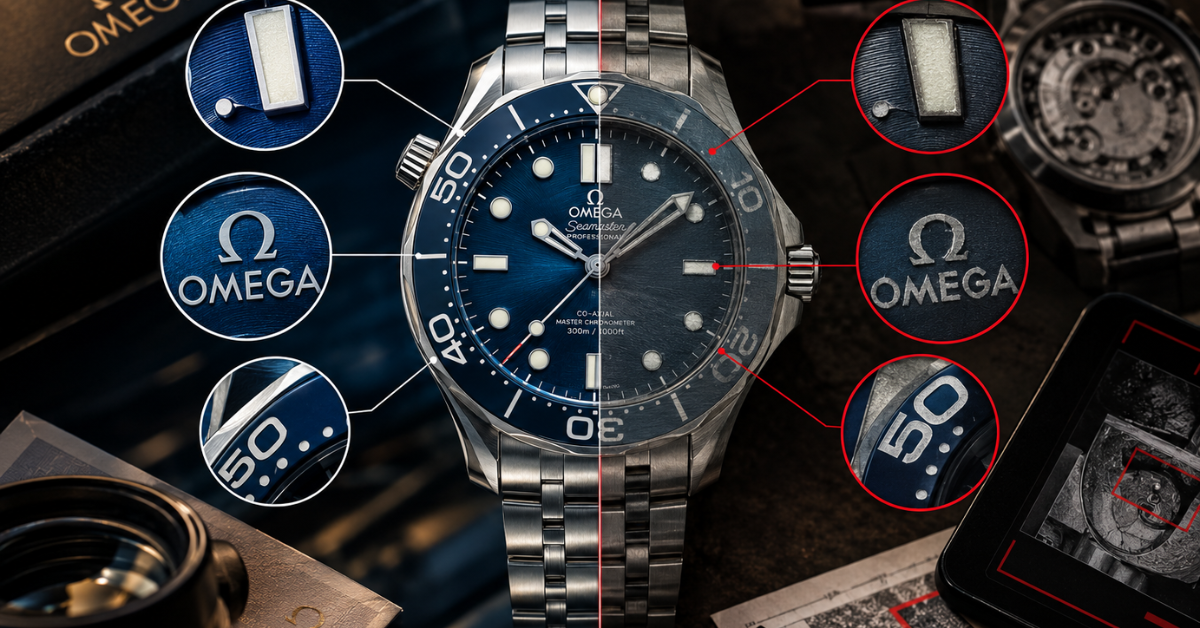
A counterfeit printing "Master Chronometer" on a dial is betting that most buyers will treat the phrase as decoration rather than a claim they can actually check. It's a specific, testable, independently verified standard with a public lookup tool behind it — treating it that way is the difference between taking a seller's word for it and actually confirming what you're paying for. If you want the broader set of authentication checks that apply across Omega's catalog beyond certification specifically, our general guide to spotting a fake Omega watch covers serial numbers, case finishing, and movement fundamentals in more depth.
FAQ
How can I verify my Omega's Master Chronometer certification is real? Enter the reference number, serial number, and access code from the watch's Master Chronometer card at omegawatches.com/masterchronometer to see that specific watch's actual recorded test results.
Can an Omega from before 2015 be Master Chronometer certified? No — Omega only introduced METAS-approved testing in 2015, with the Globemaster as the first certified watch, so any earlier reference cannot genuinely carry this designation.
What's the difference between COSC and Master Chronometer certification? COSC certifies the movement alone over 14 days; Master Chronometer requires passing COSC first, then eight additional METAS tests over roughly 10 more days on the fully assembled watch, including 15,000-gauss magnetic resistance testing.
Can a fake Omega actually pass Master Chronometer testing? No — the designation requires genuine antimagnetic materials and construction verified by an independent government testing body; a counterfeit can print the phrase on a dial, but it cannot produce genuine, verifiable test results tied to a real serial number.
Does servicing affect Master Chronometer certification status? It can be a relevant factor to confirm — verifying service history through an authorized Omega service center helps ensure a watch's certified status and performance have been properly maintained.
Conclusion
"Master Chronometer" is one of the few luxury watch claims that comes with genuine, checkable proof behind it — a real government testing body, a real 10-day battery of tests, and a public lookup tool that ties results to one specific watch. That also means it's one of the easier claims to definitively verify, or definitively debunk, if you're willing to spend two minutes actually checking rather than taking a dial's word for it.
Reviews Editor
Sofia Marchetti
Sofia focuses on dive watches, chronographs and everyday wearability, testing every piece in real-world conditions before forming a verdict.