On this page
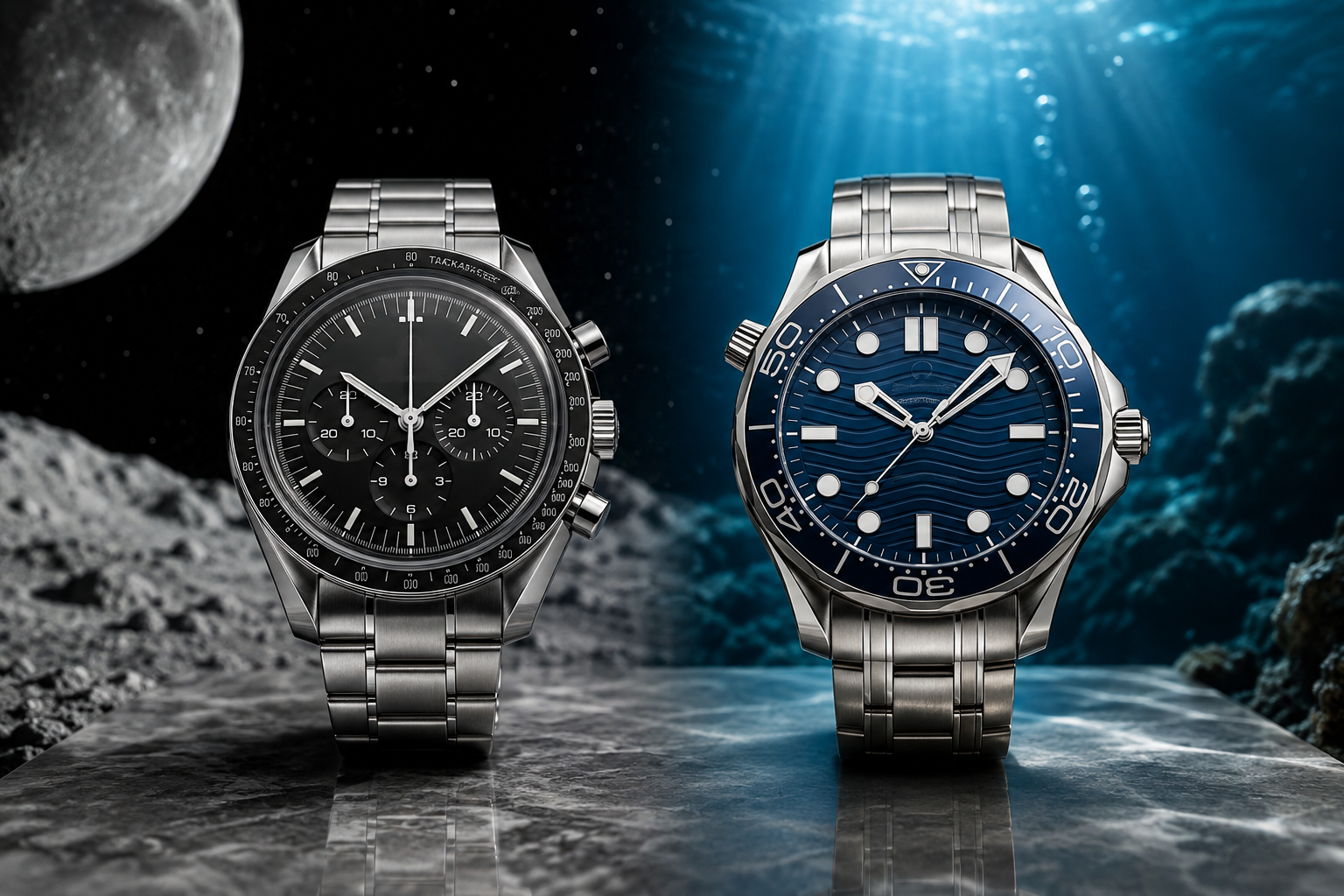
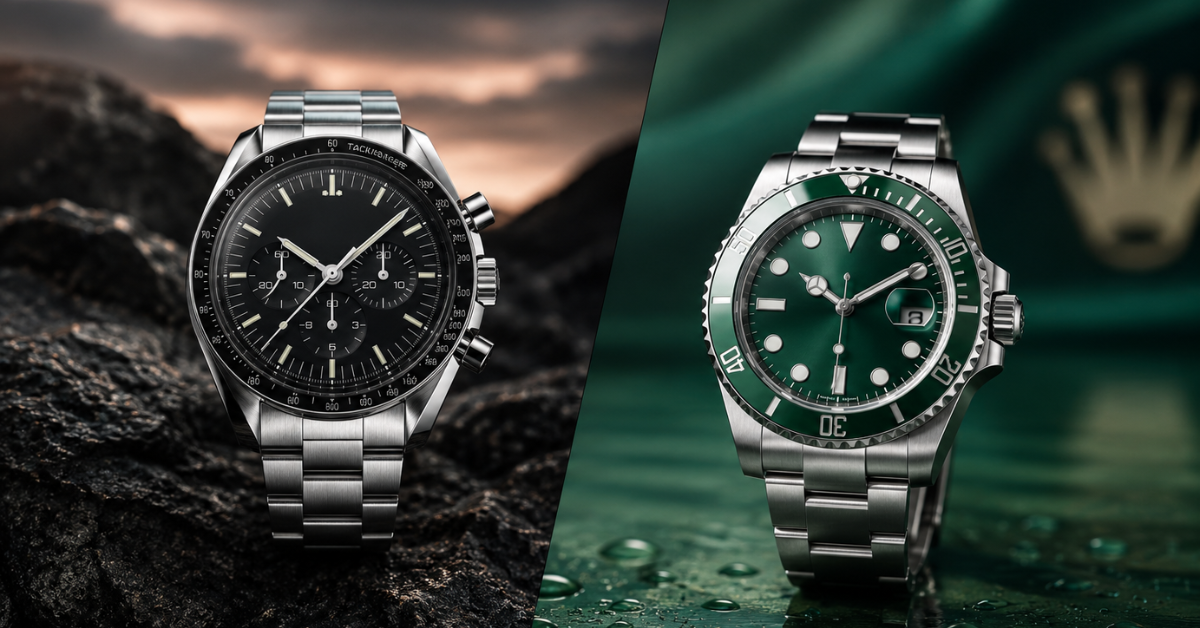
Rolex holds its value significantly better than Omega on the secondary market. Popular Rolex steel sports models — the Submariner, GMT-Master II, Daytona — commonly trade at or above retail, while even less hyped references like the Datejust typically retain 80–90% of retail. Omega, by comparison, generally depreciates 25% to 40% from retail, meaning most current Omega watches settle at roughly 60% to 75% of their original price on the pre-owned market. The gap comes down to production scarcity, not watchmaking quality — and it cuts both ways for buyers.
This is a question worth answering honestly rather than defensively, even on a site built around Omega. The numbers are clear and consistent across independent market trackers: Rolex outperforms Omega on pure resale value retention, by a real and fairly wide margin. What's less often explained is why that gap exists, and why it doesn't actually settle the "which brand should I buy" question on its own.
The Numbers, Plainly
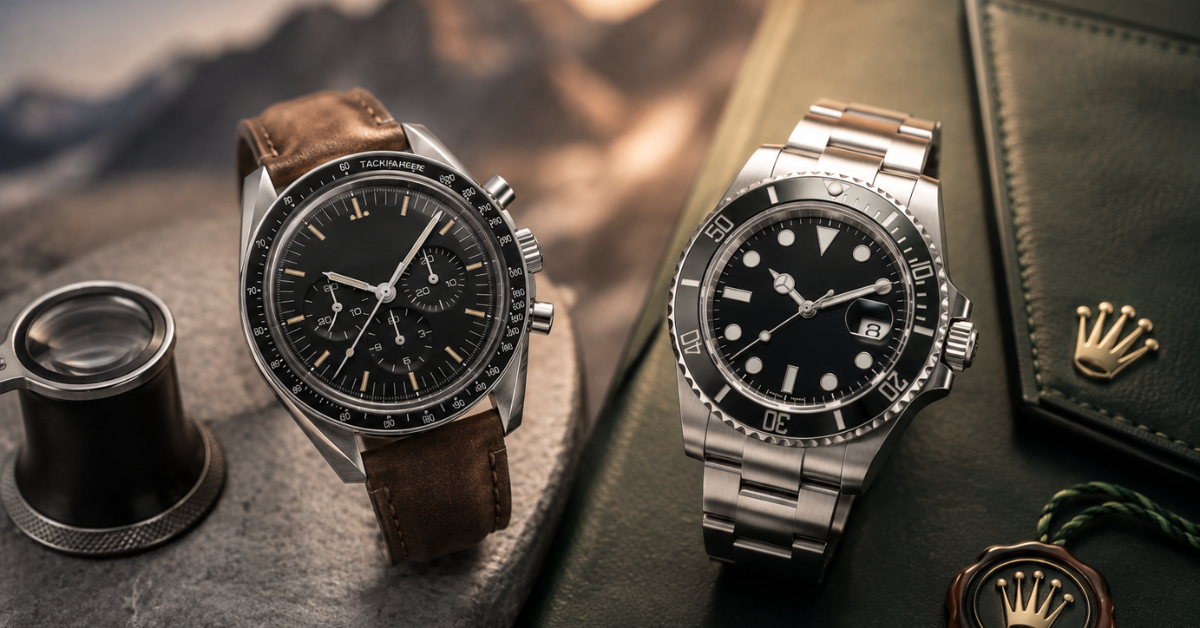
Popular Rolex steel sports references — Submariner, GMT-Master II, Daytona — routinely trade at or above their original retail price on the secondary market, with retention commonly cited in the 80% to 120%-plus range. Even Rolex's less hyped references, like the Datejust, typically hold 80% to 90% of retail value. WatchCharts has tracked the broader Rolex market index up roughly 7.9% year-over-year, a genuine appreciation trend rather than just strong value retention.
Omega's picture is meaningfully different. Depreciation generally runs 25% to 40% from retail across the catalog, meaning most current Omega references settle around 60% to 75% of their original price once resold. A Seamaster 300M retailing near $5,600, for instance, commonly trades $3,500 to $4,200 pre-owned — a real, not trivial, gap. Our own Omega Price Trends 2026 coverage found the same pattern: most current-production Omega references depreciate meaningfully, with only specific limited pieces bucking that trend.
Why the Gap Exists — and It Isn't About Quality
This is the part that gets flattened in a lot of brand comparisons, and it's worth being direct about: the value-retention gap between Rolex and Omega reflects production strategy and market positioning, not a meaningful difference in movement engineering or build quality.
Rolex produces roughly 1.1 million watches annually — a substantial number — and still can't fully meet demand for its most popular steel sports references. Authorized dealers maintain waitlists, prioritize existing client relationships, and often require buyers to purchase less-desirable models before earning access to a Submariner or Daytona. That controlled scarcity is precisely what sustains secondary-market premiums; when supply is perpetually constrained relative to demand, prices on the resale market stay elevated by design.
Omega takes a structurally different approach. Its catalog is broader, its authorized dealer network sells closer to available demand, and walking into a boutique to buy a Speedmaster or Seamaster without a waitlist is genuinely normal in most markets — a dynamic we covered in detail in Omega Waitlists in 2026. That accessibility is a real point in Omega's favor for buyers who actually want to wear a watch rather than wait years for one — but it's also the direct mechanical reason Omega doesn't sustain the same secondary-market premiums Rolex does. Scarcity, not superiority, is doing most of the work in Rolex's resale numbers.
Where Omega Actually Performs Better Than the Average
It's worth being specific rather than treating "Omega depreciates" as a flat, uniform statement. Certain references consistently outperform the brand's broader average — the Speedmaster Professional and popular Seamaster editions in particular tend to depreciate closer to 20% to 30% rather than the 40% end of the range, and specific limited pieces have traded above retail entirely. For context on what actually drives that kind of premium within Omega's own catalog, our price trends coverage breaks down which references are genuinely appreciating versus holding flat.
If you're weighing a specific Omega purchase with resale in mind, sticking to the brand's most recognized steel sports references — rather than less common configurations — meaningfully improves your odds of landing in that better-performing tier. Our Seamaster Diver 300M review and Best Omega Speedmaster Models guide both cover the specific references that tend to hold value most reliably within Omega's catalog.
What Omega Wins on Instead
Value retention isn't the only number that matters, and Omega's case doesn't rest entirely on comparing badly to Rolex on one metric. Omega's Master Chronometer movements deliver 15,000-gauss magnetic resistance — genuinely superior antimagnetic performance to what Rolex offers at comparable price points — alongside Co-Axial escapement technology that reduces friction and extends service intervals. On pure engineering-per-dollar, Omega frequently outspecs Rolex references at similar retail prices.
Depreciation also cuts in the buyer's favor if you're purchasing rather than selling. Because Omega settles at a real discount to retail on the pre-owned market, buying used effectively lets you skip the steepest depreciation — the drop that happens the moment any watch leaves an authorized dealer — while still getting essentially the same watch a first owner paid full price for. A pre-owned Speedmaster at roughly half its original retail price is a genuinely different value proposition than trying to find a Submariner anywhere near MSRP.
So Which Should You Actually Buy?
This comes down to what you're actually optimizing for, and both answers are legitimate:
- Want an asset that's likely to hold or grow in value, and you're comfortable with the wait and allocation process that comes with it? Rolex has the stronger, more consistent track record.
- Want a genuinely capable, well-engineered Swiss watch you can walk in and buy today, wear without excessive precaution, and accept a real but predictable depreciation curve on? Omega remains an excellent choice — and the pre-owned market specifically rewards buyers who don't need the badge of buying new.
Neither answer makes the other brand a mistake. It's a question of what you're actually trying to get out of watch ownership — appreciation potential, or watchmaking value per dollar spent. If you're deciding between specific models rather than just brands, our Omega Watches Buying Guide covers how to make that call within Omega's own catalog once you've settled the bigger question.
FAQ
Does Omega hold its value as well as Rolex? No — Rolex generally retains value significantly better, with popular steel sports models often trading at or above retail, while Omega typically depreciates 25% to 40% from retail on the secondary market.
Why does Rolex hold value better than Omega if both are quality Swiss watches? The gap comes primarily from production scarcity — Rolex deliberately constrains supply of its most popular references relative to demand, sustaining secondary-market premiums, while Omega sells closer to available demand with less allocation friction.
Which Omega watches hold value best? The Speedmaster Professional and popular Seamaster references generally depreciate less than the broader Omega catalog, typically in the 20% to 30% range rather than up to 40%.
Is it better to buy Omega or Rolex pre-owned? It depends on your goal — Omega pre-owned offers a genuine discount off retail for essentially the same watch, while Rolex pre-owned often still trades near or above retail, making new purchase more comparable in cost if you can get allocation.
Is Omega a worse watch than Rolex because it depreciates more? No — depreciation reflects market scarcity and demand dynamics, not build quality or engineering; Omega's Master Chronometer movements offer comparable or superior technical specifications to Rolex at similar price points.
Conclusion
Rolex wins the value-retention argument clearly and consistently — the data isn't close, and there's no honest way to spin it otherwise. But value retention is one specific metric, driven largely by deliberate scarcity rather than a gap in what's actually inside the watch. If resale performance is genuinely your top priority, that's a real reason to lean Rolex. If you want strong engineering, real variety, and the ability to actually buy the watch you want without a years-long waitlist, Omega remains one of the best values in Swiss watchmaking — depreciation included.
Senior Watch Writer
James Whitfield
James has spent over a decade covering Swiss horology, vintage markets and modern releases. He believes the best watch is the one you actually wear.